Chemistry
Ever wondered what was in that sandwich you ate for lunch? Or what is in your bottle of water as well as the water? Or what is in anything come to that?
Chemistry gives the opportunity to find out, to understand the properties of substances and to discover how atoms can be joined together to make different things. Chemists have produced a huge range of materials including all the different sorts of metals and plastics used to make a car or a mobile phone, to the detergent in shower gel, fibres and colours in clothes, painkillers and anticancer medicines.
These modern products have an extraordinary impact on the way we live, but we tend to take them for granted and we forget that they would not exist without the chemical knowledge used to make them. In the UK, chemistry-related industries make billions of pounds of profit on a ten-billion-pound turnover and are big export earners for the country with a wide range of career opportunities.
The GCSE course is designed both for pupils only studying the subject at GCSE level and for those continuing to A Level. It involves a lot of practical work; pupils acquire knowledge and understanding of chemical patterns and principles which they learn to apply to familiar and unfamiliar situations. The course follows on naturally from Year 9 and the secret of success is keeping up to date, making the ideas easier to understand and remember. Pupils develop an appreciation of the scientific, social, economic, environmental and technological contributions of Chemistry and the range of topics covered is wide.
The course looks at how we get metals from rocks, obtain fuels and make polymers from crude oil. A simple model of atomic structure is developed to explain how atoms are bonded together, and the properties of substances are accounted for by looking at their structures.
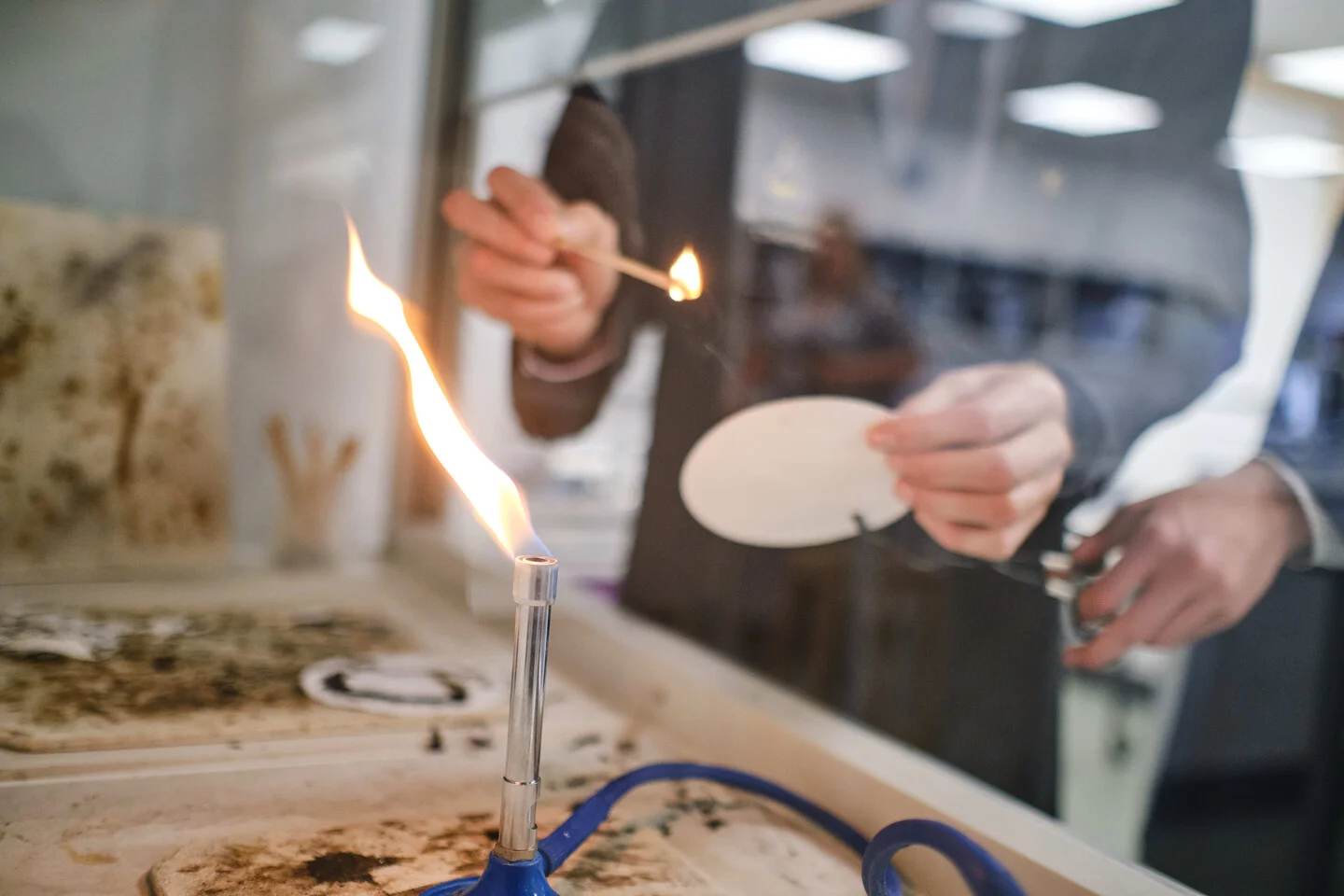
Chemical formulae and equations are used to link and predict the quantities of reactants and products in chemical reactions. Consideration is given to the energy changes involved in chemical reactions, how reactions can be made to go faster and how yields of products can be increased. Practical work also includes reactions of acids and analysis of substances using flame tests and precipitation reactions.
Assessment is by two written papers taken at the end of Year 11, both 1 hour and 45 minutes long and worth 100 marks each. These papers include assessment of practical skills, so there is no separate coursework or controlled assessment component to worry about during the year.
A Chemistry qualification at GCSE is essential for anyone considering further study in a whole range of scientific, medical and engineering fields, and can lead on to a huge number of occupations from art restorer to zoologist. It is the central science, overlapping with both Physics and Biology.
At a Glance
Exam Board
AQA
Assessment
2 exams (1 hour 45 minutes each)
Head of Department
R Ball
r.ball@lsf.org
Related Subjects
-
Biology
View subject →: BiologyBiology is the science of life — and it is all around you. From how your body trains, fuels and … -

Computer Science
View subject →: Computer ScienceWhy study Computer Science?
Computer Science is fundamentally about problem solving — a skill that underpins success not only in … -
Core Sport
View subject →: Core SportThe Foundation philosophy for Sport is very much ‘Sport for All’. Enjoyment: This is first and foremost to inspire a …