Classical Civilisation
Why study Classical Civilisation?
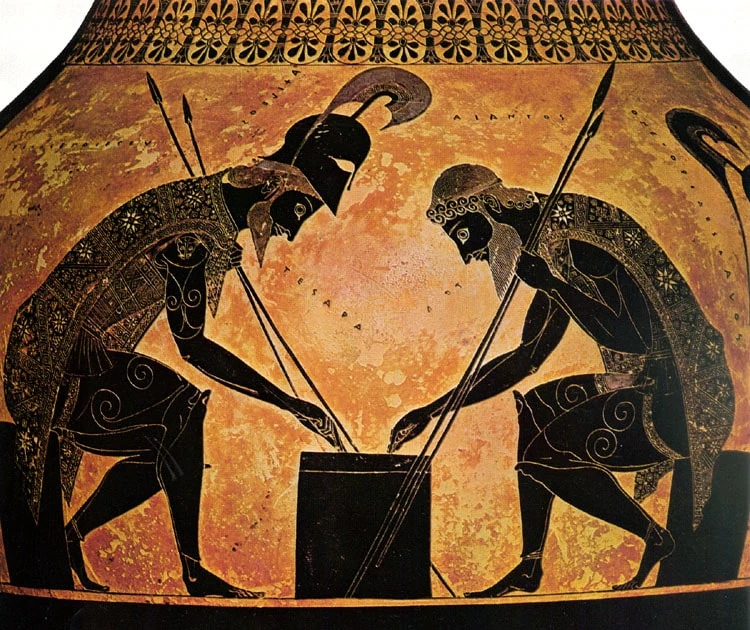
Pupils who enjoy discovering the ancient world, where myths are part of everyday life and when brave and honourable heroes were championed by Olympian gods, will be perfect candidates to take this subject at GCSE. This GCSE provides an opportunity to explore both Ancient Greece, with an emphasis on Athens and Sparta, and Rome thematically, creating a wide-ranging course of study. The course enables pupils to respond to and engage with a wealth of literature, visual and material culture equipping them with readily transferable analytical skills. In conclusion, one of the best things about Classical Civilisation is the wide range of exciting topics there are to study. If a pupil enjoys subjects such as History, English, Philosophy, Art, Politics and Archaeology, then Classical Civilisation lets them do a bit of everything whilst studying two of the most important civilisations of the Western world.
This GCSE subject provides a self-contained two-year course and does NOT require any previous study of a classical subject or knowledge of Classical Greek or Latin languages. If a pupil likes watching programmes or reading about the ancient world and is interested in History, English or Archaeology, this is the course for them.
GCSE Structure
Paper 1 (50%): ‘Women in the Ancient World’: Thematic Study
Pupils will explore the lives and representations of famous women in the societies of Athens and Republican Rome, although wider material, such as that from Sparta or Pompeii, is also included. The public role of women is also explored, including their involvement in the religious life of the city and in the world of politics. This enables discussion of how these women are represented and what this reveals about ancient ideas about gender. There are a wealth of famous women in myth and legend. From Helen to Cleopatra, we will enjoy learning about these figures in more depth and exploring how the ancient world thought about these figures, about whom stories are still written.
Paper 2 (50%): ‘War and Warfare’: Culture and Literature
This component explores war and warfare in Greece and Rome, with particular focus on Athenian, Spartan and Roman armed forces and the impact of war and warfare in the wider society. Pupils will also study four of the most famous battles of the ancient world: the battle of Thermopylae, the battle of Salamis, the battle of Actium and the campaigns of Trajan against the Dacians. The pupils will read the work of four ancient writers: while Homer and Virgil refer to fighting in their mythological past, the poems of Tyrtaeus and Horace provide a contemporary view to war. All enable the pupils to explore ideas of human heroism and dignity through conflict.
Pupils are encouraged to read and research widely, both in books and online and also on archaeological sites and in museums. We normally take a study trip in Year 10, and we also take trips together with Loughborough High School to Classical events – plays in translation and trips abroad – which may also contribute to pupils’ understanding of and knowledge about the course.
Classical Civilisation has the advantage of offering a very broad, humanities-based course which can, within limits, be tailored to the interest of different individuals. It offers great variety and interest and introduces pupils to authors and ideas which are the basis of much modern Western European culture; social and political history and literature form the core of the course, but it extends to involve religion, art, architecture and philosophy.
At a Glance
Exam Board
OCR
Assessment
The course comprises of two exams.
- 50% Exam 1 Thematic Study
- 50% Exam 2 Culture & Literature
Head of Department
Dr S Nichols
s.nichols@lsf.org
Related Subjects
-

Geography
View subject →: GeographyWhy study Geography?
GCSE Geography is one of the most relevant and wide-ranging subjects pupils can choose. It helps them … -
Greek
View subject →: Greek(Only available as an extra GCSE on Thursday afternoon) Classical Greek is a favourite subject of the brightest pupils in … -
History
View subject →: HistoryPupils study the Edexcel IGCSE syllabus that focuses on the world-changing events of the 20th century. This gives pupils the …