History
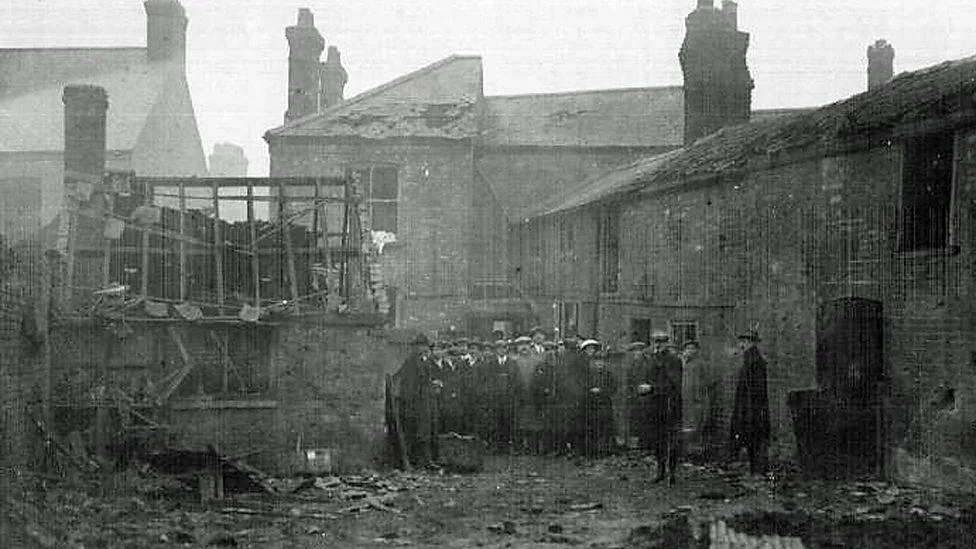
Pupils study the Edexcel IGCSE syllabus that focuses on the world-changing events of the 20th century. This gives pupils the opportunity to gain an insight into the events which have helped to form the world in which we live. Grammar School History results are excellent.
In the last few years 55-60% of pupils gained grades 8-9, continuing a trend of consistently excellent results, with History being the best or joint best result for the majority of our pupils.
Pupils will cover four exciting topics over the two years:
- The First World War
- Hitler’s Germany
- The Middle East
- Stalin’s Russia
IGCSE History helps pupils become world-ready through the development of critical thinking skills, analysis, and persuasive writing. Candidates are taught to analyse a great variety of historical evidence in order to make reasoned judgements and present compelling evidence-based evaluations. Historians are well prepared for employment and university study, with particularly good communication and analytical skills that transfer easily into a variety of career paths, especially the Law, Journalism, the Civil Service, Politics, Media, and Management Consultancy.
Exam questions are broken into manageable chunks, and the skills will be familiar from questions practised since Year 7. The shorter questions are completed in only a few minutes, with the longest essays taking less than half an hour. The key to success at IGCSE History is deploying knowledge efficiently and succinctly and arguing persuasively and convincingly. We are lucky to have a very well-qualified teachers, several of whom are Edexcel IGCSE examiners who provide the most up-to-date techniques to ensure the best possible chance of succeeding in exams.
Topics covered:
The First World War
We begin Year 10 by looking at the First World War. As well as looking at the reasons for the war breaking out, trenches and new weaponry, we study some of the major battles such as the Somme, Passchendaele, Gallipoli, and Amiens as well as considering the naval aspects of the war. When possible, we encourage pupils to join us on a battlefields tour of Belgium and northern France – a great opportunity for more hands-on learning.
Hitler’s Germany
To complement the study of Stalin’s Russia, we look at the other major European dictator of the 1930s, Adolf Hitler. Pupils study the incredible story of his rise from unemployed artist to German leader in the space of ten years. We also study the horrors of Nazi rule including the use of death camps and secret police. Nazi policies towards the Jews and the Holocaust are looked at as well as studying the Second World War and the impact of Allied bombing on Germany. Again, this is captivating and indispensable history.
The Middle East 1917-2012
The third topic covered is a study of the long-running crisis in the Middle East. We feel this topic is a great opportunity for pupils to gain a real understanding of why there is ongoing tension between Israel and the Arab world. The course traces the roots of the conflict from the end of the First World War, through to the creation of Israel and the Suez Crisis of 1956. We then move on to the Arab-Israeli conflicts of 1967 and 1973, superpower involvement in the Middle East and the attempts to find a lasting peace right into the current century. Once again, this is a superb course that the pupils will find fascinating and will give them an acute understanding of a major contemporary political issue.
Stalin’s USSR
Stalin, the self-styled ‘Man of Steel’, transformed the USSR from a backwards nation that had been badly beaten in the First World War into a superpower with nuclear technology by the time he died in 1953. We look at how Stalin ruthlessly grabbed power in the 1920s by exiling and killing rivals, how he brutally crushed any opposition to his rule in the Great Terror of the 1930s and how his leadership and industrial policies led to the defeat of the Nazis in the Second World War. Stalin killed 20 million of his own people during his rule yet Russians openly wept when he died in 1953. This period of history is utterly captivating and must be studied!
At a Glance
Exam Board
IGCSE Edexcel
Assessment
Two 90-minute exams, no coursework.
Head of Department
D Murphy
d.murphy@lsf.org
Related Subjects
-
Classical Civilisation
View subject →: Classical CivilisationWhy study Classical Civilisation?
Pupils who enjoy discovering the ancient world, where myths are part of everyday life and when … -

Geography
View subject →: GeographyWhy study Geography?
GCSE Geography is one of the most relevant and wide-ranging subjects pupils can choose. It helps them … -
Greek
View subject →: Greek(Only available as an extra GCSE on Thursday afternoon) Classical Greek is a favourite subject of the brightest pupils in …