
Design & Technology
Introduction
Design and Technology continues to heavily influence the world around us and therefore remains an exciting and engaging subject. It draws together skills from a broad range of disciplines including Physics, Mathematics, History and Art, and consequently requires pupils to develop their knowledge and abilities in numerous areas.
Whilst there are no prior learning or other requirements for this qualification, it is expected and highly desirable for pupils to have studied the subject at Year 9 given the fundamental skills and knowledge developed during this year. If pupils have not studied the subject before, particularly if joining us as a new starter, then they may feel at a significant disadvantage, as the GCSE builds upon what they have been introduced to in earlier years. However, if a new pupil still wishes to complete the GCSE, then this must be authorised by the Head of Department.
Aims and objectives
As part of the course, the pupils will learn a wealth of skills and experience various opportunities. As described by the exam board, some of the primary aims and objectives of this qualification are to enable pupils to:
- Consider the costs, commercial viability and marketing of products.
- Demonstrate their understanding that all design and technological activity takes place in contexts that influence the outcomes of design practice.
- Develop realistic design proposals as a result of the exploration of design opportunities and users’ needs, wants and values.
- Use imagination, experimentation and combine ideas when designing.
- Develop the skills to critique and refine their own ideas while designing and making.
- Communicate their design ideas and decisions using different media and techniques, as appropriate for different audiences at key points in their designing.
- Develop decision-making skills, including the planning and organisation of time and resources when managing their own project work.
- Develop a broad knowledge of materials, components and technologies and practical skills to develop high quality, imaginative and functional prototypes.
- Be ambitious and open to explore and take design risks in order to stretch the development of design proposals, avoiding clichéd or stereotypical responses.
Assessment overview
The GCSE is assessed through the following two components:
Component 1 (Paper code: 1DT0/1F)
Written examination: 1 hour and 45 minutes, 50% of the qualification
The paper consists of two sections. Section A (worth 40 marks) is assessed on the core content of the qualification which concerns a variety of topic areas including electronics, polymers, mechanisms, textiles, and new and emerging technologies. Section B (worth 60 marks) is assessed specifically on the material category of timbers and focuses on topics such as stock forms, tools and equipment, and social and cultural issues.
This paper includes calculations, short-open, graphical, as well as extended-writing questions. Pupils receive weekly theory lessons in both Years 10 and 11 to equip them with the skills and knowledge required to complete this assessment, which is completed at the end of Year 11.
There are regular assessments to gauge learner progression.
Component 2
Non-Examination Assessment, 50% of the qualification
The assessment requires pupils to work through a design process where they will produce a ‘design, make and evaluate project’. Pupils will complete a portfolio which will contain approximately 30 sides of A3 paper and an accompanying prototype that they have manufactured. The assessment is completed at the school and is internally assessed and externally moderated. There are four parts to the assessment:
Investigate | This includes investigation of needs and research, and a product specification
Design | This includes the production of different design ideas, a review of initial ideas, the development of design ideas into a chosen design, the communication of design ideas and the review of the chosen design
Make | This includes manufacture of the prototype where quality, accuracy, and skills are assessed
Evaluate | This includes testing and evaluation of the prototype.
During Year 10, pupils complete a variety of tasks in preparation for the Non-Examination Assessment. These include developing analytical skills, communicating ideas effectively to others, and practical-based projects. In the summer term of Year 10, pupils formally begin the actual assessment where they choose their own personal response to a set context provided by the exam board. This project will require pupils to determine their own project direction in consultation with a specific user or client and continues for the duration of Year 11 before its final submission during the spring term.
Facilities
The department is very well equipped to help the pupils realise their ideas. We have
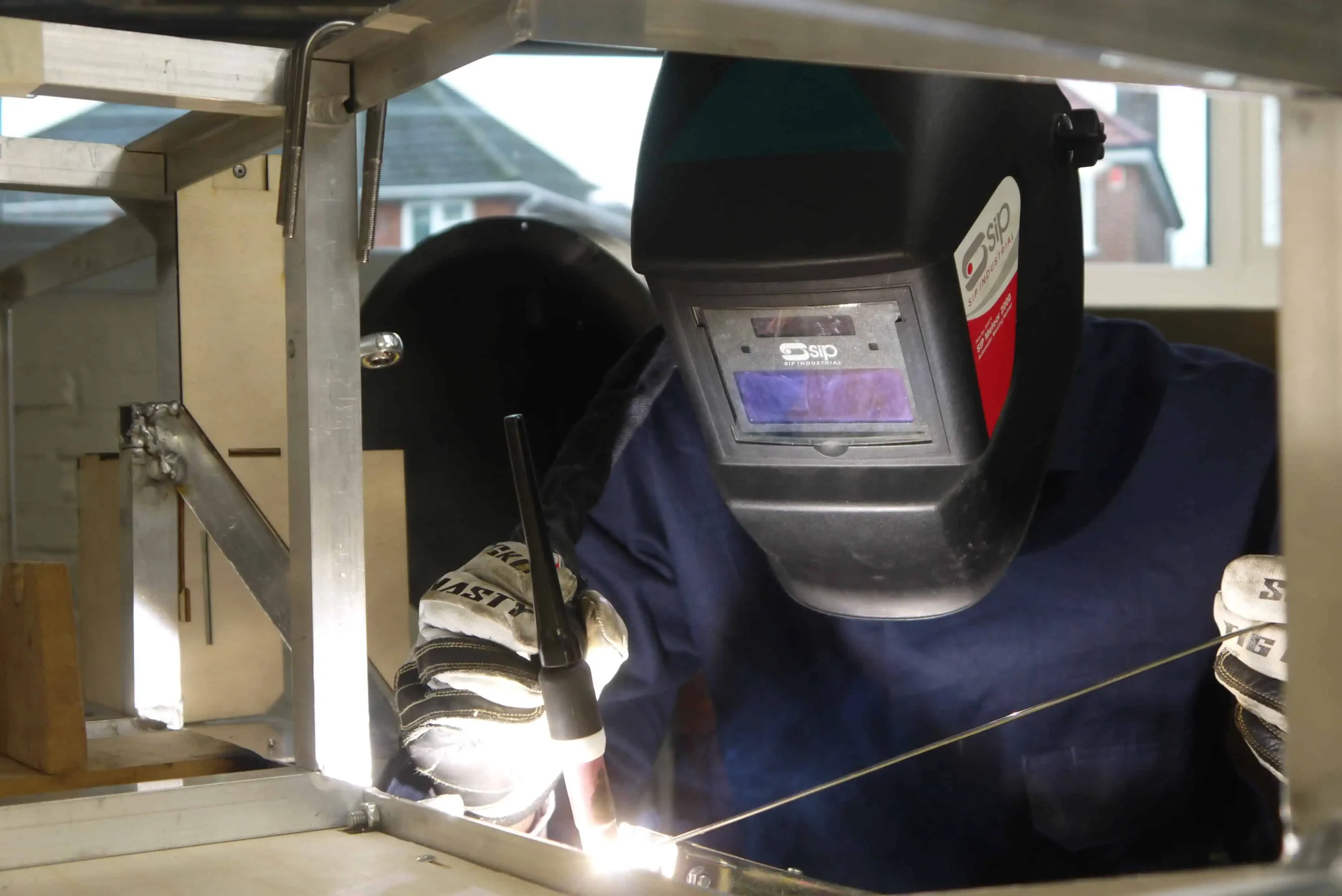
specific timber and metal workshops, which have a wealth of tools and equipment. These include engineering machines such as the centre lathes and a milling machine. We also have various computer-controlled devices including a CNC router and laser cutter. The department also houses 3D printers, which the pupils are encouraged to use as part of their prototype outcomes.
Alongside the workshops, we have two computer suites which feature the modelling software, Solidworks. This is heavily used in industry, and this educational edition enables pupils to develop their skills thoroughly in this area.
Further information
Due to the nature of the subject and the iterative nature of the project work, the course can be very demanding in terms of time and pupils must expect to spend some of their free time within the department, particularly in Year 11. There are many opportunities for them to do so during the school week as the department is very keen to support the pupils in fulfilling their potential. Importantly, this aspect of the subject can greatly appeal to some pupils – the NEA allows pupils to work on their projects throughout the year rather than solely basing their GCSE qualification on their performance in the final examinations in Year 11.
It is also important to note that an additional cost of £20 per project is also added to School fees towards material costs.
“Design is thorough, down to the last detail.”
Dieter Rams


At a Glance
Exam Board
Pearson Edexcel
Assessment
The course comprises of two components:
- 50% Non-Examination Assessment
- 50% Written Exam 1hr 45m
Head of Department
Mr T Moseley
t.moseley@lsf.org
Related Subjects
-
Biology
View subject →: BiologyBiology is the science of life — and it is all around you. From how your body trains, fuels and … -
Chemistry
View subject →: ChemistryEver wondered what was in that sandwich you ate for lunch? Or what is in your bottle of water as … -

Computer Science
View subject →: Computer ScienceWhy study Computer Science?
Computer Science is fundamentally about problem solving — a skill that underpins success not only in …