Geography
Why study Geography?
A Level Geography provides an excellent foundation for ambitious future pathways because it combines scientific understanding, human insight, data analysis, fieldwork and critical evaluation. It supports a wide range of UCAS routes and careers, including environmental science, planning, surveying, sustainability, energy, engineering, finance, law, consultancy, government, geopolitics, education, research, commerce and public health. Geographers are valued because they can interpret evidence, understand people and places, analyse risk and communicate complex ideas clearly. As climate change, resource security, migration, urban growth and environmental management become increasingly important, Geography gives students the knowledge and transferable skills to contribute to some of the most significant decisions shaping the future.
This is supported by UCAS career guidance linking Geography to planning, environmental conservation, tourism, aid, teaching, finance and business, Prospects’ geography careers list including GIS, data analysis, environmental consultancy, sustainability and town planning, and the Royal Geographical Society’s view that geographers are highly employable because of their skills, knowledge and understanding.
What is the exam board and route?
AS and A Level Geography Cambridge International (9696).
- Year 12 AS exams (50%)
- Year 13 A Level (50%)
Subject Entry Requirements: Grade 6 in GCSE Geography is advised.
Students sit the AS examination at the end of Year 12 and carry these marks forward, giving Geography a real strategic advantage. The October resit in Year 13 provides a valuable opportunity to improve AS marks before the final A Level result, helping students strengthen their overall grade. This structure supports consistently strong outcomes, with 50% achieving A* to A in 2024, 38% in 2023 and 74% in 2022.
Complementary subjects
Geography complements a wide range of A Level subjects because it bridges the Sciences, Humanities and Social Sciences. It works especially well alongside Biology, Chemistry, Physics, Economics, History and Politics, adding breadth to a purely scientific or arts-based pathway while supporting many career routes.
Subject outline
A Level focuses on developing a detailed knowledge and synoptic understanding of Physical and Human Geography.
Year 12 Core Physical Geography Pupils study the physical systems that shape the planet and create some of the most important challenges facing society, including rivers and flooding, weather and climate change, tectonic processes, mass movements and physical hazards. These topics help pupils understand how natural processes operate, why risks vary between places and how societies can respond more effectively.
Year 12 Core Human Geography Pupils explore some of the most pressing human issues of the modern world, including population change, migration, water security and urban growth. The course examines why places develop differently, how resources are managed and how cities can become more sustainable.
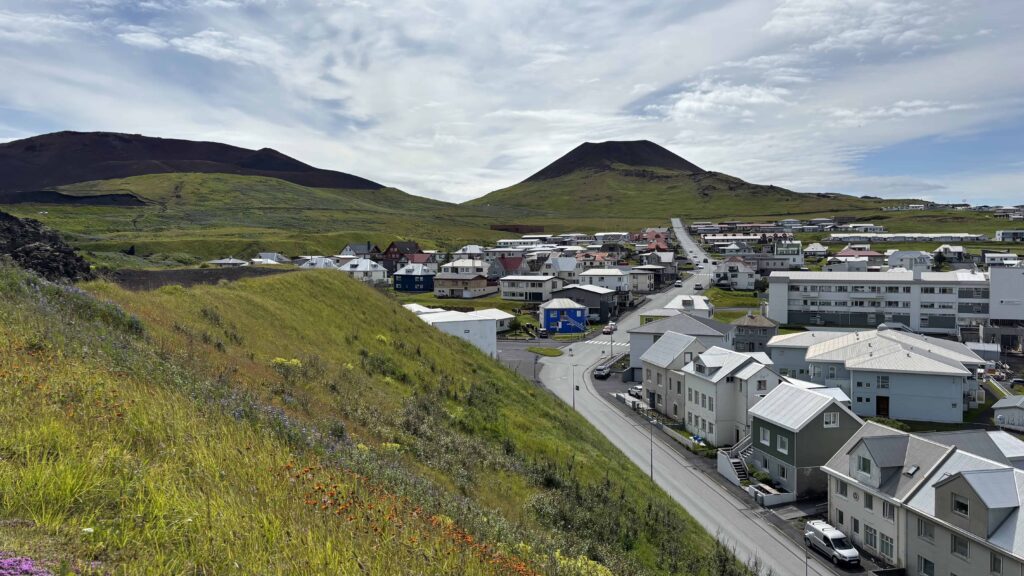
Year 13 Advanced Physical Options The advanced physical topics allow pupils to deepen their understanding of dynamic and hazardous environments, including coasts, coral reefs, earthquakes, volcanoes, hurricanes, wildfires and risk management. The above photograph of Eldfell on Heimaey, visited during the Iceland trip, links directly to volcanic hazard management, where the 1973 eruption showed how monitoring, evacuation and pioneering lava control can reduce risk. These units are highly relevant to climate change, disaster management, planning, engineering and environmental science.
Year 13 Advanced Human Options The advanced human topics focus on global systems and environmental decision making, including energy security, sustainability, pollution, environmental degradation, trade, aid and tourism. These topics are especially relevant to future careers in international development, geopolitics, finance, business, energy, law, planning and environmental management.
How is this course assessed?
AS marks (50% of A Level) are carried forward to Year 13. The remaining 50% of marks are gained from the two option units taken in Year 13.
Year 12:
- Paper 1 – Core Physical (1hr 30): three x 15-mark structured questions based on each topic and one x 15-mark essay question.
- Paper 2 – Core Human (1hr 30): Same structure as physical.
Year 13:
- Paper 3 – Physical Options (1hr 30): for each of the two topics, one x 10-mark structured question and a choice of one of two essay questions.
- Paper 4 – Human Options (1hr 30): Human Options (1hr 30): Same structure as physical.
A Level Geography is for students who want to understand the forces shaping the future. From climate change, flooding and volcanic hazards to migration, energy security and geopolitics, the course develops the knowledge, fieldwork experience and analytical skills needed to make sense of a rapidly changing world.
At a Glance
Exam Board
Cambridge International
Assessment
100% examination – 50% AS Level in Year 12 and 50% in Year 13 for A2
Entry Requirements
Grade 6 in GCSE Geography
Head of Department
Mr M Butcher
m.butcher@lsf.org
Overseas trip opportunities
The Department runs a 6-day overseas field trip to the below locations, to show and help students visualise some of the concepts and locations taught in the classroom:
Norway
Iceland
Related Subjects
-

Business
View subject →: BusinessWhat is the exam board and route?
A Level Business Studies WJEC Eduqas Subject Entry Requirements: Grade 6 in GCSE English and GCSE … -

Classical Civilisation
View subject →: Classical CivilisationWhat is the exam board and the route?
A Level Classical Civilisation OCR Subject Entry Requirements: Grade 7 in GCSE English … -

Classical Greek
View subject →: Classical GreekWhat is the exam board and the route?
A Level Classical Greek OCR (GCSE required) Subject Entry Requirements: Grade 6 in GCSE …